
The Ultimate Camera Buying Guide: Brands, Bodies & Lenses
A Deep Dive into the Top Camera Systems of the Modern Era
Choosing a camera is no longer just about buying a body; it is about buying into an entire ecosystem. When you choose a brand, you are also choosing their specific lens mount, color science, and autofocus technology. In this comprehensive guide, we will break down the titans of the photography industry, explore their specific camera lineups, and analyze the lenses they support.
1. Sony: The Mirrorless Pioneer
Sony aggressively pushed the industry into the mirrorless era. They are renowned for having the most advanced autofocus systems (Real-time Eye AF) and exceptional low-light performance.

Camera Lineups:
- APS-C Lineup (a6000 series): Compact, incredibly powerful, and perfect for hybrid shooters. For instance, an a6300 offers stunning 4K and 120fps slow-motion capabilities. When paired with a fast prime like a 50mm f/1.8 FE lens, it delivers a cinematic depth of field and sharpness that easily rivals setups costing three times as much.
- Full-Frame Lineup (A7 & A9 series): Professional powerhouses. The A7 series is split into sub-categories: A7 (Hybrid), A7R (High Resolution for landscapes), and A7S (The ultimate low-light video king).
Lens System (Sony E-Mount):
Sony’s biggest advantage is the E-Mount. Because they opened this mount to third-party manufacturers early on, you have a massive, affordable selection of brilliant lenses from brands like Sigma, Tamron, and Samyang, alongside Sony’s premium “G Master” lenses.
2. Canon: The King of Color & Ergonomics
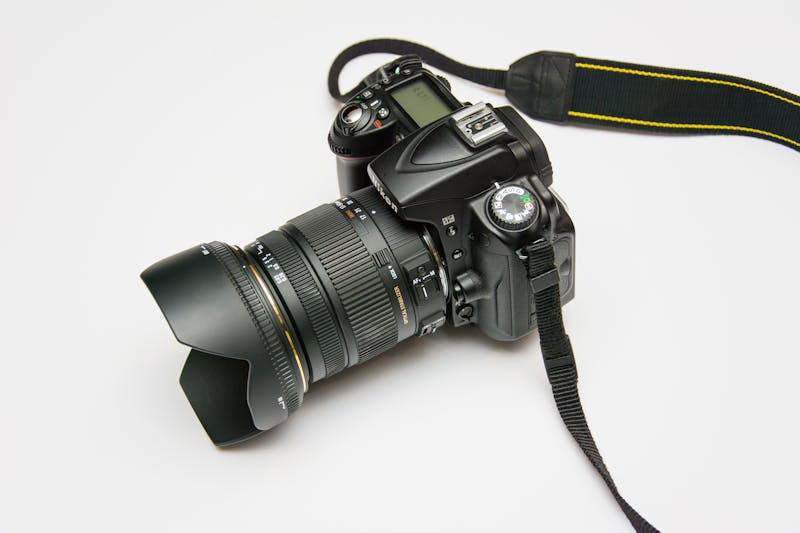
Canon is the most popular camera brand globally. Photographers love Canon for their legendary “color science” (which renders skin tones beautifully straight out of the camera) and their highly intuitive menus and grip designs.
Camera Lineups:
- DSLRs (EOS Rebel & 5D series): The classic optical viewfinder cameras. While being phased out, they are durable and excellent for beginners on a budget.
- Mirrorless (EOS R System): Canon’s future. Cameras like the EOS R5 and R6 offer mind-blowing burst speeds and incredible in-body image stabilization (IBIS).
Lens System (EF & RF Mount):
The older EF-Mount (for DSLRs) has the largest lens library in the world and adapts flawlessly to mirrorless bodies. Their new mirrorless RF-Mount features some of the sharpest, most technologically advanced lenses ever made, though they are currently very expensive with limited third-party options.
3. Nikon: The Dynamic Range Master
Nikon cameras are beloved by landscape and wildlife photographers for their rugged weather sealing and exceptional sensor dynamic range, which allows you to recover an immense amount of detail from shadows in post-production.

Camera Lineups:
- DSLRs (D-Series): Cameras like the D850 are still considered some of the greatest photographic tools ever built.
- Mirrorless (Z-System): The Z6, Z7, and the flagship Z9 feature a massive lens mount diameter that allows for extreme light gathering and edge-to-edge sharpness.
Lens System (F & Z Mount):
The legacy F-Mount offers decades worth of affordable vintage and modern glass. The new mirrorless Z-Mount lenses are optically phenomenal, often considered the sharpest available today.
4. Fujifilm: Retro Soul & Film Simulations
Fujifilm took a different path. Instead of focusing on Full-Frame sensors, they perfected the APS-C format. Their cameras feature stunning retro, tactile dials (analog ISO and Shutter Speed dials) and built-in “Film Simulations” that mimic classic film stocks (like Portra or Kodak) directly in-camera.

Camera Lineups:
- X-Series (APS-C): The X-T5 and X-S20 are brilliant hybrid cameras. The X100VI is the ultimate premium compact camera for street photography.
- GFX Series (Medium Format): For high-end studio and portrait work, utilizing sensors much larger than full-frame for unmatched detail and depth.
Lens System (X-Mount):
The X-Mount features lenses built specifically for APS-C sensors, meaning they are smaller, lighter, and often cheaper than full-frame lenses while delivering premium image quality.
5. Panasonic Lumix: The Video Powerhouse
If your primary focus is filmmaking, documentaries, or YouTube, Panasonic is a heavyweight. They were the first to bring 4K, 10-bit color, and unlimited recording times to consumer hybrid cameras.
Camera Lineups:
- Micro Four Thirds (GH Series): Cameras like the GH6 use a smaller sensor, making the lenses incredibly compact while offering cinema-grade video codecs.
- Full-Frame (S Series): The Lumix S5II features exceptional phase-detect autofocus and Netflix-approved video specs.
Lens System (MFT & L-Mount):
The Micro Four Thirds mount is shared with Olympus, giving you a massive library of tiny lenses. The Full-Frame L-Mount is a collaboration between Panasonic, Leica, and Sigma, offering high-end, professional glass.
Ultimate Price vs. Value Comparison
Which system offers the best return on your investment based on today’s market?
| Category / Sensor Type | Top Brand Models | Average Body Price | Lens Cost & Variety | Value Score |
|---|---|---|---|---|
| Used DSLRs | Canon Rebel / Nikon D3500 | $300 – $500 | Extremely Cheap / Massive variety | ⭐⭐⭐⭐ (8/10) |
| APS-C Mirrorless | Sony a6000 series / Fuji X-T series | $700 – $1,500 | Moderate / Great third-party options (Sony E) | ⭐⭐⭐⭐⭐ (10/10) – Best All-Around Value |
| Full-Frame Mirrorless (Entry) | Sony A7III / Canon R8 / Nikon Z5 | $1,300 – $2,000 | Expensive (Pro-grade glass required) | ⭐⭐⭐⭐ (8.5/10) |
| Premium Compact | Fuji X100VI / Ricoh GR III | $1,000 – $1,600 | N/A (Lens is built-in) | ⭐⭐⭐ (7.5/10) – Niche Use |
Final Advice: Date the Body, Marry the Lens.
Camera bodies become outdated every few years, but good lenses last a lifetime. Choose the ecosystem with the lenses that fit your budget and style, and the rest will follow.